

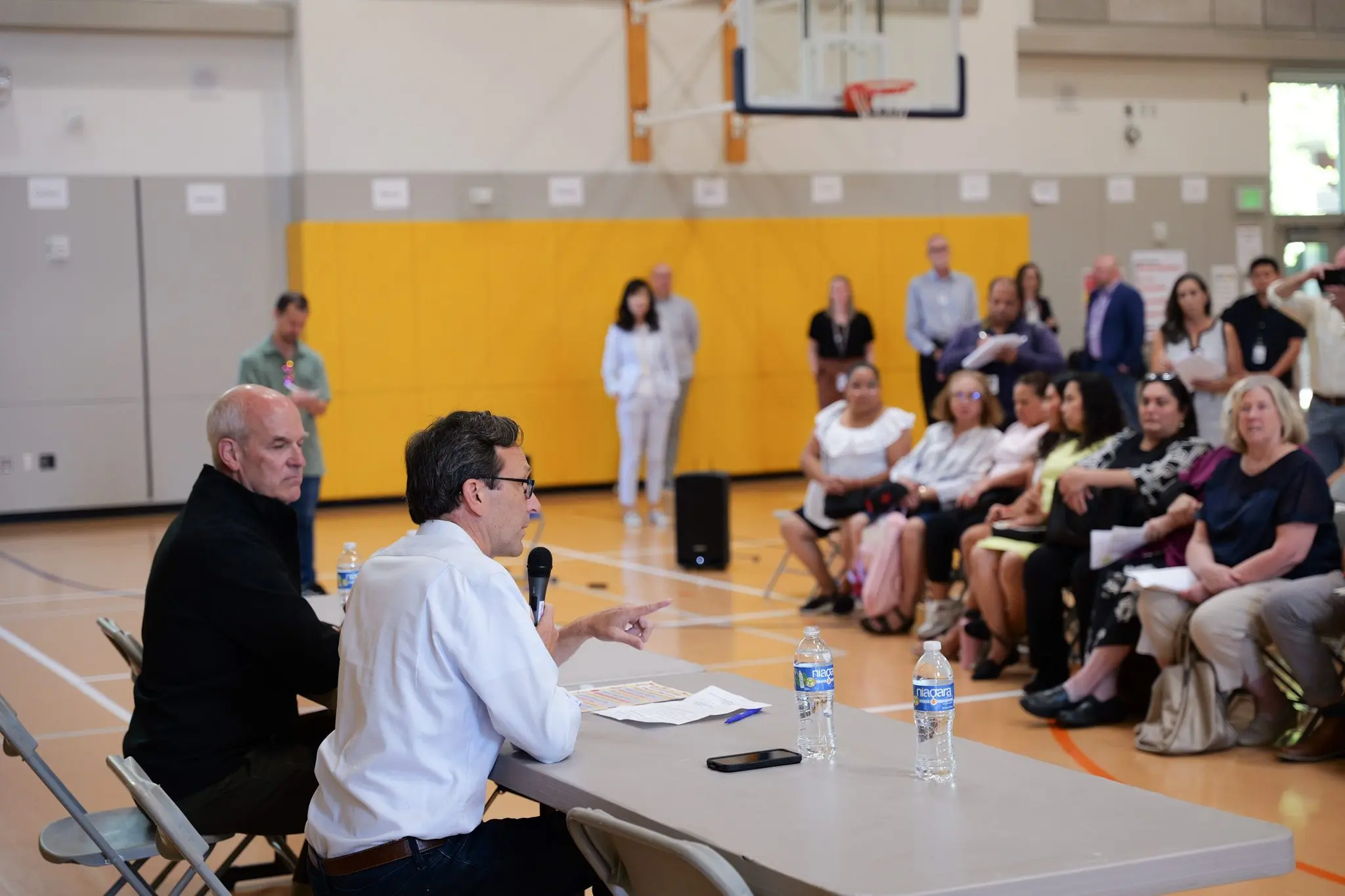
At a listening session yesterday (Thur) at Lynnwood Elementary School in western Washington, Governor Bob Ferguson joined U.S. Representative Rick Larsen and affected community members to discuss the impacts of federal cuts to food assistance programs, including the Supplemental Nutrition Assistance Program, or SNAP.
During the site visit to a local summer meals program, the Governor and Congressman served bagged lunches to children. Then, they heard personal stories from families, local nonprofits and Edmonds School District staff about how the Trump Administration’s impending cuts to the social safety net are disrupting efforts to feed hungry kids.
According to a news release from the Governor’s office, approximately 1 million Washingtonians use SNAP benefits every month to purchase food. Thirty-four percent of Washingtonians who rely on SNAP benefits are children. As a result of the budget bill passed by Congress last month, known as House Resolution 1, every Washingtonian who relies on SNAP will see their benefits reduced. At least 137,000 Washingtonians are at risk of losing their SNAP benefits altogether, due to new work requirements. The measure also made refugees and asylum seekers ineligible for assistance, affecting approximately 33,000 people.
Ferguson fears the cuts will also cause ripple effects throughout the economy and put a strain on other food assistance programs, such as school districts’ free and reduced lunch programs.
The USDA estimates that every $1 in SNAP benefits generates more than $1.50 in local economic activity. The losses in SNAP spending will translate to $360 million annually that will not be spent at grocery stores, farmers markets and other retailers. Downstream that affects the workers at grocery stores and markets, as well as the farmers who supply them.
The SNAP cuts will also shift the administrative burden to Washington state. Specifically, when the state share of SNAP benefits starts Oct. 1, 2027, it could cost the state between $100 million and $300 million per year.


