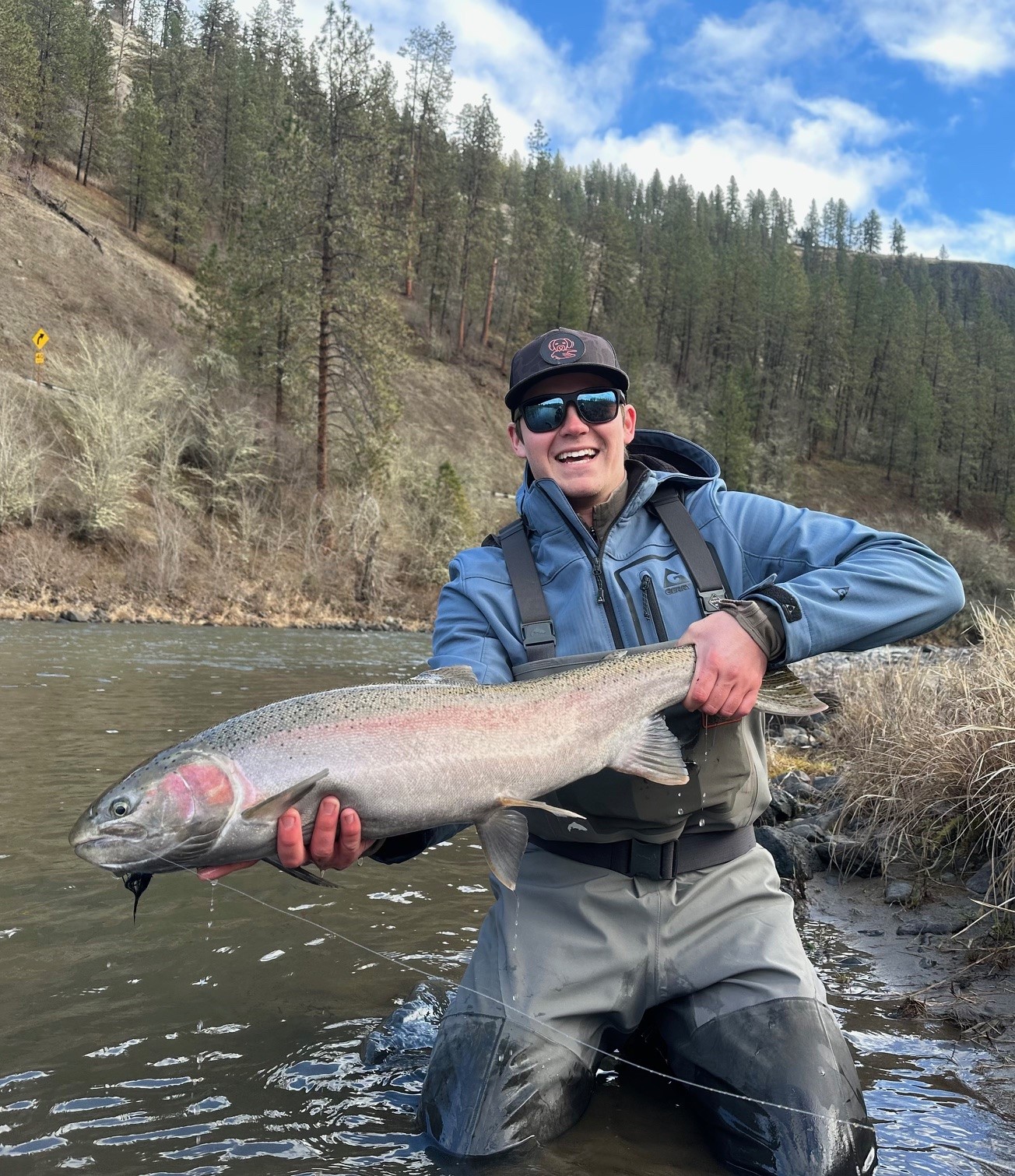
LEWISTON, ID – Anglers who fish for steelhead on the South Fork Clearwater River can help the Idaho Department of Fish and Game with its angler-caught broodstock program. This program, which raises fish to be used in hatcheries to spawn the next generation of fish, begins tomorrow. The agency has relied on the public to capture broodstock since 2010.
Clearwater Region Fisheries Manager Joe DuPont says for those who have not participated in this program in the past, it is the perfect year to start as there will be a lot of fish migrating into the South Fork.
Alex De Los Rios, Clearwater Regional Fisheries Technician, says eligible steelhead will be brought to and spawned at Dworshak National Fish Hatchery, then released back into the South Fork Clearwater as smolts.
“In theory, this localized broodstock program will create fish that are more adapted to return to the South Fork Clearwater River and result in more robust runs in the future,” he says.
“This year, we are incredibly excited to say that over 12,000 hatchery steelhead have passed over Lower Granite Dam that are bound for the South Fork Clearwater River. This is the largest return to the South Fork Clearwater River we have seen since the inception of our localized broodstock program. Needless to say, that is a lot of fish with their sights set on the South Fork, and we couldn’t have done it without your help,” De Los Rios adds.
IDFG will be collecting broodstock seven days a week until April or until our broodstock goals are met—whichever comes first.
Anglers who are interested in participating in the program just need to sign a volunteer form that staff will have with them, allowing them to handle and “tube” steelhead with an intact adipose fin.
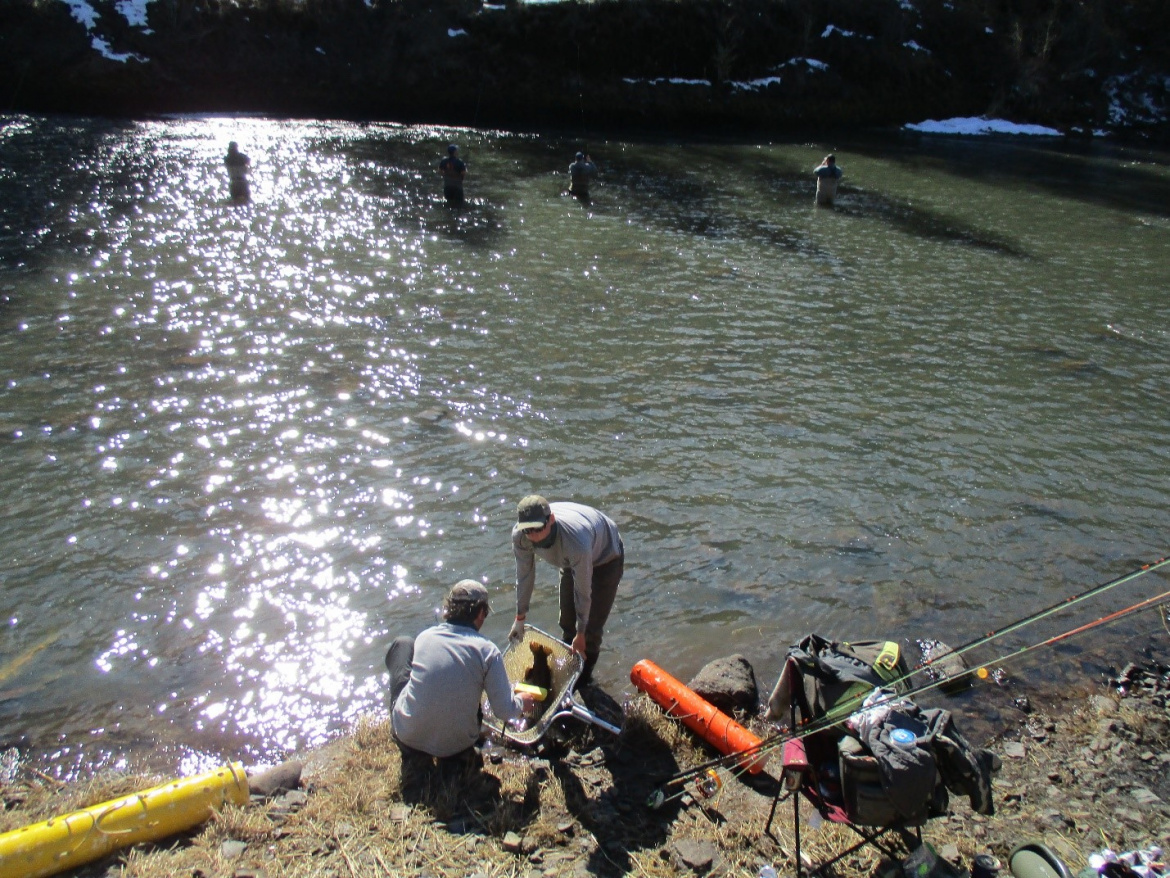
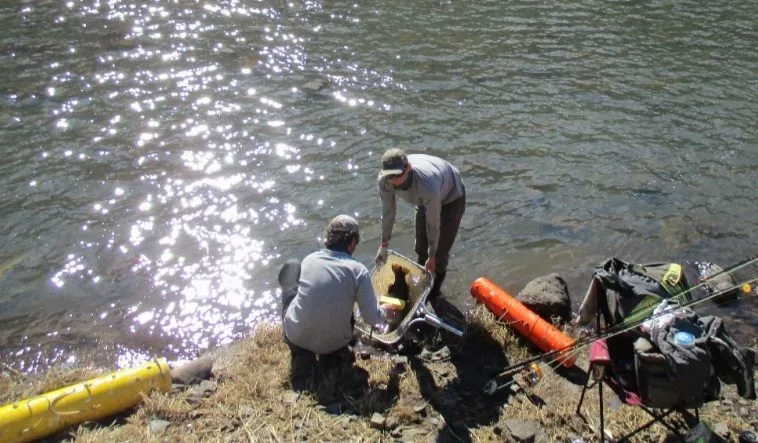
De Los Rios says to safely hold steelhead until IDFG picks them up, multicolored tubes of different sizes will be placed on the river bank where anglers are observed fishing. Anglers who are signed up for the program can elect to put any steelhead that they do not plan on keeping into the tubes.
“Keep in mind, eligible fish can have both clipped and unclipped adipose fins. We highly recommend placing all steelhead that you cannot harvest (or don’t desire to harvest) in the holding tubes. Fish and Game’s creel technicians and hatchery staff will be moving up and down the river frequently to check tubes and sample captured fish for genetics, PIT tags, and broodstock eligibility,” De Los Rios adds.
Anglers are asked not to relocate tubes, maintain only one live fish per tube, and remember that once a steelhead goes into a tube, it can’t be removed and harvested.
“In addition, please try to reserve the larger tubes for large fish, and the smaller tubes for smaller fish that can fit comfortably inside them. Once a steelhead is put in a tube, it should be fully submerged in water but shallow enough for staff to access. Additionally, make sure the steelhead is faced upstream, and the tube is not in silt or mud. Fish and Game staff will have informational sheets to distribute further detailing the tubing process to participating anglers,” De Los Rios says. “We appreciate your assistance and look forward to seeing you out on the river soon. The continued success of the South Fork Clearwater localized broodstock program ultimately relies on the help of anglers like you.”