

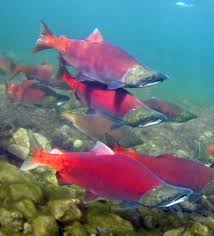
A new study says salmon and trout anglers across the Pacific Northwest are going to have fewer places to fish over the next 40 years.
Scientists at the Forest Service’s Rocky Mountain Research Station in Boise found that in the summer and early fall, rivers in the Pacific Northwest have already warmed 1.8 degrees Fahrenheit since 1976. That’s the same rise measured at the Bonneville Dam over the last 80 years and used in models by climate scientists.
The researchers studied 391 monitoring sites, and the temperature pattern gives them confidence the warming trend is going to continue for the next four decades. That means salmon and trout are going to have less habitat, and will be replaced by warm-water fish like smallmouth bass, though the warming isn’t happening as fast as scientists previously thought, giving both the fish and managers time to adapt.
The study was conducted after the 2015 season, when warm temperatures in the Columbia, Snake, and Salmon rivers killed off nearly all of the sockeye salmon returning to Idaho’s Sawtooth Valley. The research shows that sockeye, which migrate during the heat of the summer, are going to be exposed to lethal temperatures in rivers from 5 to 16 percent longer during their trip. The study also showed that increases in river temperature correlate with those for air temperature, and with river flow declines in the late summer and fall.
River managers can offset some of the problem by changing how much water is released from reservoirs, and when. The U.S. Army Corps of Engineers already does that at Dworshak Dam on the Clearwater River, and the Bureau of Reclamation does the same on the Klamath River in Oregon. (Idaho Statesman)


